

Introduction
Choosing the right sofa fabric is an important part of creating a comfortable and well-designed home. The fabric affects not only how your sofa looks but also how it feels, performs, and fits into your lifestyle. From relaxed linen to luxurious velvet and versatile upholstery fabrics, each material offers a different combination of texture, durability, and visual character. At Skipper Furnishings, we believe upholstery should be selected with the same attention to quality and detail as every other element of an interior.
Why Sofa Fabric Matters
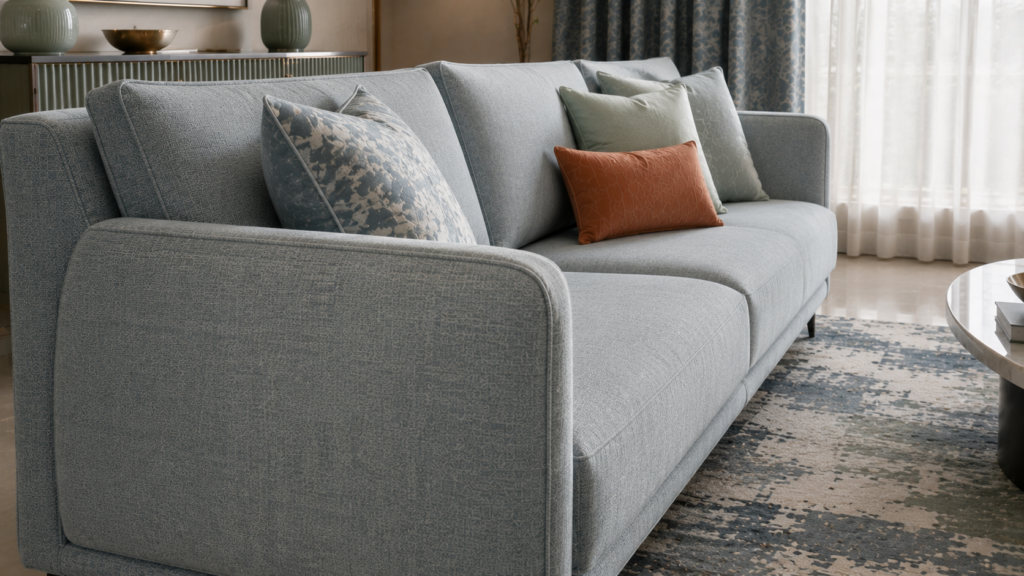
A sofa is often one of the largest pieces of furniture in a living room, making its upholstery a major part of the overall interior.
The right sofa material can:
- Define the visual character of the room
- Add texture and depth
- Improve everyday comfort
- Complement rugs, curtains, and cushions
- Suit the level of use the sofa receives
- Influence the overall longevity of the furniture
A fabric that looks beautiful but does not suit your lifestyle may not be the right choice. Consider both aesthetics and practical requirements before making your selection.
Different Types of Sofa Fabric
There is no single best sofa fabric for every home. The ideal choice depends on the room, lifestyle, maintenance preferences, and desired appearance.
Linen
Linen has a naturally textured appearance and works particularly well in relaxed, contemporary, and understated interiors. It brings softness and an effortless character to upholstered furniture.
Cotton
Cotton is versatile and comfortable, making it suitable for a wide range of interiors. It can create a clean and approachable look while offering a variety of textures and finishes.
Velvet
Velvet adds depth, softness, and a luxurious character to a sofa. It works particularly well in sophisticated interiors where upholstery is intended to make a stronger visual statement.
Performance Upholstery Fabrics
For frequently used sofas, performance-oriented upholstery fabric can offer practical benefits while still providing attractive textures and finishes. These fabrics can be particularly useful for busy households where durability and easier maintenance are important considerations.
How to Choose Sofa Fabric for Your Lifestyle
When deciding how to choose sofa fabric, start by thinking about how the sofa will actually be used.
Consider Daily Usage
A sofa used every day requires a fabric suited to regular wear. For formal spaces used occasionally, you may have more flexibility when selecting delicate or decorative textures.
Think About Maintenance
Consider how easy the fabric is to clean and maintain. If the sofa is in a high-use area, practical upholstery may be preferable.
Consider Comfort
Texture plays an important role in how a sofa feels. Soft, tactile fabrics can make a living room feel more inviting and comfortable.
Look at Natural Light
Natural daylight can change how fabric appears throughout the day. Always consider how the material and texture interact with the light in your room.
Best Sofa Fabrics for Indian Homes
For a sofa fabric for home, practicality and design should work together. Indian homes can experience varied levels of heat, humidity, dust, sunlight, and everyday use, making fabric selection particularly important.
Linen and cotton can work beautifully in relaxed interiors, while velvet can add richness to more formal spaces. For frequently used family areas, durable upholstery fabrics may offer a practical balance between appearance and everyday performance.
The best choice ultimately depends on the specific room, lifestyle, maintenance expectations, and overall interior design.
How to Match Sofa Fabric With Your Interior
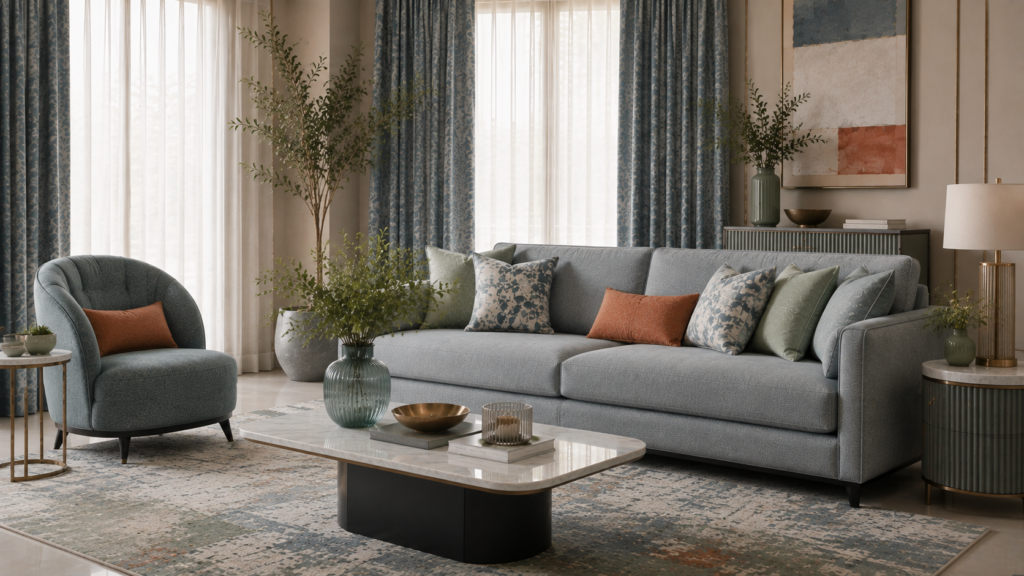
Your sofa upholstery should work as part of the larger interior rather than being selected in isolation.
When choosing fabric for sofa, consider the relationship between the upholstery and:
- Curtains
- Rugs
- Cushions
- Flooring
- Wall finishes
- Lighting
- Other furniture
You do not need to match every element exactly. Instead, create connections through complementary tones, textures, and visual weight.
For example, a textured sofa can be paired with a smoother rug and flowing curtains, while cushions can introduce subtle variations in pattern or texture.
How to Maintain and Care for Sofa Fabric
Proper care can help preserve the appearance and performance of your upholstery.
- Vacuum or gently brush the sofa regularly.
- Address spills promptly according to the fabric’s care instructions.
- Avoid exposing upholstery to prolonged direct sunlight where possible.
- Use recommended cleaning methods for the specific fabric.
- Avoid harsh cleaning products unless specifically suitable for the material.
- Consider professional cleaning when required.
Always check the manufacturer’s care recommendations before using any cleaning solution.
Why Choose Skipper Furnishings?
At Skipper Furnishings, we view upholstery as an integral part of interior design. The right fabric can influence the comfort, character, and longevity of a piece while helping it work harmoniously with the rest of the room.
With our experience in soft furnishings and interior styling, we focus on helping homeowners, architects, and interior designers select materials that balance How to Choose the Right Sofa Fabric for Your Home
Introduction
Choosing the right sofa fabric is an important part of creating a comfortable and well-designed home. The fabric affects not only how your sofa looks but also how it feels, performs, and fits into your lifestyle. From relaxed linen to luxurious velvet and versatile upholstery fabrics, each material offers a different combination of texture, durability, and visual character. At Skipper Furnishings, we believe upholstery should be selected with the same attention to quality and detail as every other element of an interior.
Why Sofa Fabric Matters
A sofa is often one of the largest pieces of furniture in a living room, making its upholstery a major part of the overall interior.
The right sofa material can:
- Define the visual character of the room
- Add texture and depth
- Improve everyday comfort
- Complement rugs, curtains, and cushions
- Suit the level of use the sofa receives
- Influence the overall longevity of the furniture
A fabric that looks beautiful but does not suit your lifestyle may not be the right choice. Consider both aesthetics and practical requirements before making your selection.
Different Types of Sofa Fabric
There is no single best sofa fabric for every home. The ideal choice depends on the room, lifestyle, maintenance preferences, and desired appearance.
Linen
Linen has a naturally textured appearance and works particularly well in relaxed, contemporary, and understated interiors. It brings softness and an effortless character to upholstered furniture.
Cotton
Cotton is versatile and comfortable, making it suitable for a wide range of interiors. It can create a clean and approachable look while offering a variety of textures and finishes.
Velvet
Velvet adds depth, softness, and a luxurious character to a sofa. It works particularly well in sophisticated interiors where upholstery is intended to make a stronger visual statement.
Performance Upholstery Fabrics
For frequently used sofas, performance-oriented upholstery fabric can offer practical benefits while still providing attractive textures and finishes. These fabrics can be particularly useful for busy households where durability and easier maintenance are important considerations.
How to Choose Sofa Fabric for Your Lifestyle
When deciding how to choose sofa fabric, start by thinking about how the sofa will actually be used.
Consider Daily Usage
A sofa used every day requires a fabric suited to regular wear. For formal spaces used occasionally, you may have more flexibility when selecting delicate or decorative textures.
Think About Maintenance
Consider how easy the fabric is to clean and maintain. If the sofa is in a high-use area, practical upholstery may be preferable.
Consider Comfort
Texture plays an important role in how a sofa feels. Soft, tactile fabrics can make a living room feel more inviting and comfortable.
Look at Natural Light
Natural daylight can change how fabric appears throughout the day. Always consider how the material and texture interact with the light in your room.
Best Sofa Fabrics for Indian Homes
For a sofa fabric for home, practicality and design should work together. Indian homes can experience varied levels of heat, humidity, dust, sunlight, and everyday use, making fabric selection particularly important.
Linen and cotton can work beautifully in relaxed interiors, while velvet can add richness to more formal spaces. For frequently used family areas, durable upholstery fabrics may offer a practical balance between appearance and everyday performance.
The best choice ultimately depends on the specific room, lifestyle, maintenance expectations, and overall interior design.
How to Match Sofa Fabric With Your Interior
Your sofa upholstery should work as part of the larger interior rather than being selected in isolation.
When choosing fabric for sofa, consider the relationship between the upholstery and:
- Curtains
- Rugs
- Cushions
- Flooring
- Wall finishes
- Lighting
- Other furniture
You do not need to match every element exactly. Instead, create connections through complementary tones, textures, and visual weight.
For example, a textured sofa can be paired with a smoother rug and flowing curtains, while cushions can introduce subtle variations in pattern or texture.
How to Maintain and Care for Sofa Fabric
Proper care can help preserve the appearance and performance of your upholstery.
- Vacuum or gently brush the sofa regularly.
- Address spills promptly according to the fabric’s care instructions.
- Avoid exposing upholstery to prolonged direct sunlight where possible.
- Use recommended cleaning methods for the specific fabric.
- Avoid harsh cleaning products unless specifically suitable for the material.
- Consider professional cleaning when required.
Always check the manufacturer’s care recommendations before using any cleaning solution.
Why Choose Skipper Furnishings?
At Skipper Furnishings, we view upholstery as an integral part of interior design. The right fabric can influence the comfort, character, and longevity of a piece while helping it work harmoniously with the rest of the room.
With our experience in soft furnishings and interior styling, we focus on helping homeowners, architects, and interior designers select materials that balance quality, texture, functionality, and timeless design.
Whether you are updating an existing sofa or planning upholstery for a new piece, thoughtful fabric selection can elevate the entire interior.
Frequently Asked Questions
1. What is the best fabric for a sofa?
There is no single best option. Linen, cotton, velvet, and performance upholstery fabrics can all work well depending on the room, lifestyle, maintenance requirements, and desired aesthetic.
2. How do I choose sofa fabric for everyday use?
Consider durability, maintenance, comfort, natural light, and the amount of use the sofa receives. Frequently used sofas generally benefit from practical, durable upholstery.
3. Is velvet a good sofa fabric?
Yes. Velvet can be an excellent choice when you want a rich, soft, and luxurious appearance. It is particularly effective in sophisticated or formal interiors.
4. Should sofa fabric match curtains and rugs?
It does not need to match exactly. Complementary colours, textures, and patterns generally create a more sophisticated and cohesive interior.
5. How can I maintain sofa upholstery?
Regular cleaning, prompt attention to spills, protection from excessive sunlight, and following the fabric manufacturer’s care instructions can help maintain the upholstery.
Conclusion
The right sofa fabric can transform a piece of furniture while influencing the comfort, style, and character of your entire living space. From the relaxed texture of linen to the richness of velvet and the practicality of performance upholstery, the ideal choice depends on how you live and how you want your home to feel.
At Skipper Furnishings, we believe quality upholstery should combine thoughtful design with lasting functionality. By choosing the right fabric and coordinating it with your curtains, rugs, cushions, and other furnishings, you can create an interior that feels refined, comfortable, and distinctly your own.
Whether you are updating an existing sofa or planning upholstery for a new piece, thoughtful fabric selection can elevate the entire interior.
Frequently Asked Questions
1. What is the best fabric for a sofa?
There is no single best option. Linen, cotton, velvet, and performance upholstery fabrics can all work well depending on the room, lifestyle, maintenance requirements, and desired aesthetic.
2. How do I choose sofa fabric for everyday use?
Consider durability, maintenance, comfort, natural light, and the amount of use the sofa receives. Frequently used sofas generally benefit from practical, durable upholstery.
3. Is velvet a good sofa fabric?
Yes. Velvet can be an excellent choice when you want a rich, soft, and luxurious appearance. It is particularly effective in sophisticated or formal interiors.
4. Should sofa fabric match curtains and rugs?
It does not need to match exactly. Complementary colors, textures, and patterns generally create a more sophisticated and cohesive interior.
5. How can I maintain sofa upholstery?
Regular cleaning, prompt attention to spills, protection from excessive sunlight, and following the fabric manufacturer’s care instructions can help maintain the upholstery.
Conclusion
The right sofa fabric can transform a piece of furniture while influencing the comfort, style, and character of your entire living space. From the relaxed texture of linen to the richness of velvet and the practicality of performance upholstery, the ideal choice depends on how you live and how you want your home to feel.
At Skipper Furnishings, we believe quality upholstery should combine thoughtful design with lasting functionality. By choosing the right fabric and coordinating it with your curtains, rugs, cushions, and other furnishings, you can create an interior that feels refined, comfortable, and distinctly your own.