

Introduction
Choosing the right curtains for windows can transform the appearance, comfort, and functionality of any room. Curtains influence how natural light enters your space, provide privacy, add softness, and help connect furniture and décor into a cohesive interior. Whether you are furnishing a new home or refreshing an existing space, factors such as window size, curtain fabric, length, style, and room function all play an important role. From elegant living room drapes to practical bedroom window treatments, understanding how to choose curtains can help you create an interior that feels both beautiful and thoughtfully designed.
Why Choosing the Right Curtains for Windows Matters
Curtains are an important part of interior styling, but their purpose extends beyond decoration. The right window treatment can improve the atmosphere of a room while addressing practical requirements such as light control and privacy.
Well-selected curtains can:
- Control natural light
- Improve privacy
- Add warmth and texture
- Enhance the proportions of a room
- Complement furniture and soft furnishings
- Create a more polished interior
- Add character and personality to your space
For example, lightweight curtains can help maintain an airy and bright atmosphere, while heavier fabrics can create a more intimate and luxurious setting.
The key is to select curtains based on the specific needs of your room rather than choosing them purely for their appearance.
How to Choose Curtains Based on Your Window Size
Window proportions should be one of the first considerations when selecting curtains. The right treatment can enhance the architectural features of a window, while an incorrectly proportioned curtain can make a room feel unbalanced.
Curtains for Different Window Sizes
Large windows often benefit from generous, full-length curtains that emphasise their scale. Floor-to-ceiling treatments can also make the ceiling appear taller and create a more dramatic visual effect.
For smaller windows, avoid choosing curtains that overwhelm the opening. A carefully positioned curtain rod or track can extend beyond the window frame, allowing the curtains to open fully and giving the impression of a wider window.
When selecting curtains, consider:
- Window width and height
- Ceiling height
- Wall space around the window
- Furniture placement
- Amount of natural light
- Desired curtain fullness
The installation height also matters. Mounting the curtain track or rod higher than the window frame can create a more elongated and elegant appearance.
Different Curtain Styles for Windows
There are numerous curtain styles for windows, and each creates a different visual effect. The style you choose should complement the architecture of your room and the overall design direction.
Pleated Curtains
Pleated curtains offer a structured and tailored appearance. They work particularly well in sophisticated and formal interiors.
Wave Curtains
Wave curtains create smooth, consistent folds that give windows a clean and contemporary appearance. They are particularly suitable for modern interiors.
Eyelet Curtains
Eyelet curtains feature evenly spaced rings along the top of the fabric, creating a relaxed and contemporary look.
Layered Curtains
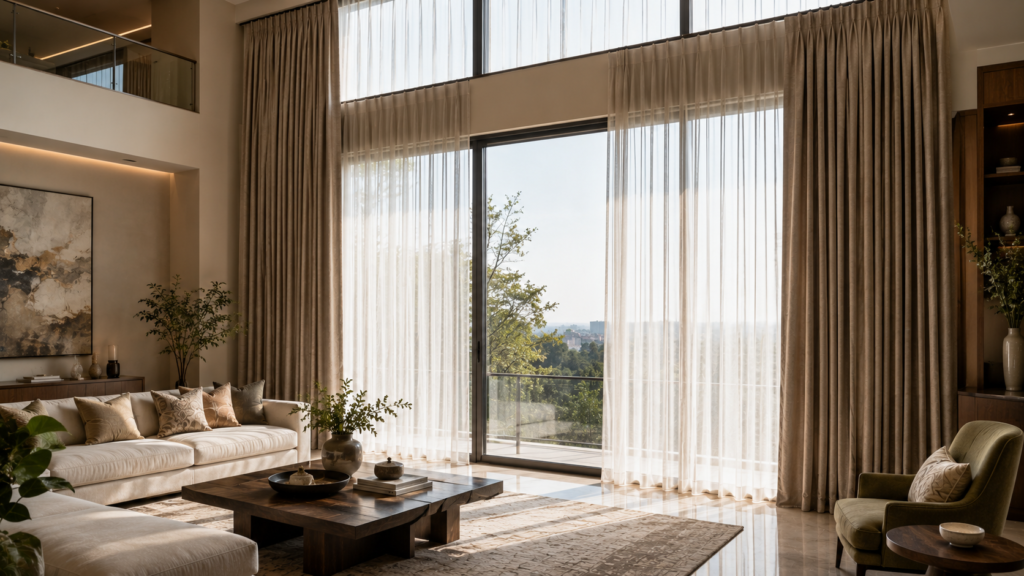
Combining sheer curtains with heavier drapes provides flexibility. Sheers can filter daylight during the day, while the outer layer can provide additional privacy and light control when required.
For homeowners looking for designer curtains, the heading style, fabric, fullness, and finishing details can all be customised to create a more refined appearance.
How to Choose the Right Curtain Fabric
The fabric is one of the most important elements when selecting curtains for home windows. It affects the way curtains fall, the amount of light they filter, their texture, and the overall mood of the room.
Linen
Linen offers a natural texture and relaxed elegance. It works beautifully in contemporary, minimalist, and understated interiors.
Cotton
Cotton is versatile and suitable for a variety of rooms. Depending on its construction and lining, it can provide anything from a lightweight appearance to greater privacy.
Velvet
Velvet creates a rich, luxurious appearance and adds depth to interiors. It works particularly well when you want a dramatic or sophisticated window treatment.
Sheer Fabrics
Sheer curtains allow natural daylight to filter through while providing a soft layer of privacy. They can also be paired with heavier curtains for greater flexibility.
Blackout Fabrics
Blackout options are ideal when stronger light control is required, particularly in bedrooms and media rooms.
When selecting a fabric, consider its weight, texture, maintenance requirements, light-filtering properties, and how it complements the rest of your interior.
Curtains for Different Rooms
Different rooms require different levels of privacy, light control, and visual softness. Your curtain selection should therefore reflect the function of the space.
Curtains for Living Room Windows
Living rooms are often the main entertaining spaces in a home, so window treatments should balance style and functionality.
Floor-length curtains can add elegance, while layered sheers and heavier drapes provide flexibility throughout the day. Consider fabrics and textures that complement your sofa, cushions, rugs, flooring, and other furnishings.
For a sophisticated look, avoid selecting curtains that compete with the room’s focal elements. Instead, choose complementary textures and tones.
Curtains for Bedroom Windows
Bedrooms benefit from curtains that create privacy and help control natural light. Depending on the amount of sunlight entering the room, you may want to consider blackout or lined curtains.
Soft fabrics and full-length treatments can also contribute to a more comfortable and restful atmosphere.
Curtains for Large Windows
Large windows can become a major architectural feature of a room. Use full-height curtains to emphasise their scale and create a sense of grandeur.
For particularly wide windows, consider multiple curtain panels with sufficient fullness to maintain elegant folds when closed.
Curtains for Small Windows
Small windows require careful proportion. Curtains that are too heavy or wide can visually overwhelm the space.
Consider mounting the curtain hardware slightly outside and above the window to create the appearance of greater width and height. Lightweight fabrics can also help maintain an open feeling.
How to Match Curtains With Your Interior
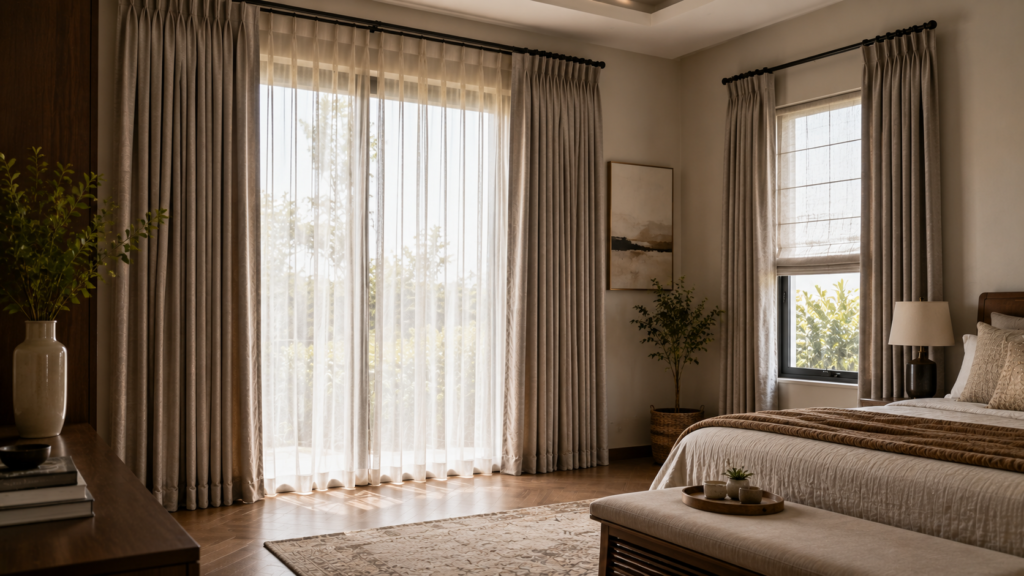
Curtains should feel like part of the overall interior rather than an isolated decorative element. When choosing them, look at the existing furniture, flooring, rugs, cushions, wall finishes, and lighting.
Instead of trying to match every element exactly, focus on creating visual relationships through:
- Complementary tones
- Similar textures
- Balanced patterns
- Consistent design language
- Appropriate levels of contrast
For minimalist interiors, subtle textures and understated fabrics can create sophistication without visual clutter. In more traditional or luxurious spaces, richer fabrics and detailed finishes can add depth.
If you are looking for luxury curtains for home, consider how the fabric, fullness, length, and installation contribute to the overall sense of quality.
Common Mistakes to Avoid When Choosing Curtains
Even beautiful curtains can look out of place if they are incorrectly selected or installed. Avoid these common mistakes:
Choosing the Wrong Length
Curtains that stop well above the floor can make an otherwise elegant room appear unfinished. Measure carefully before ordering.
Using Insufficient Width
Curtains need enough fullness to create natural folds. Insufficient fabric can result in a flat and inexpensive appearance.
Ignoring Natural Light
Consider how much sunlight your room receives before choosing your fabric. A fabric that works beautifully in a darker room may not be suitable for a space with intense sunlight.
Selecting Curtains in Isolation
Curtains should complement the rest of your interiors. Consider your furniture, rugs, cushions, flooring, and wall finishes before making a final decision.
Forgetting the Hardware
Curtain rods, tracks, rings, and other hardware contribute to the final appearance. Make sure the hardware suits both the curtain style and the interior.
Frequently Asked Questions
1. How do I choose curtains for windows?
Start by considering your window size, room function, natural light, privacy requirements, interior style, and preferred fabric. Then determine the appropriate curtain length, width, and hanging style.
2. What curtains work best for large windows?
Full-length curtains with sufficient width and fullness are generally ideal for large windows. Layering sheers with heavier curtains can provide additional flexibility.
3. Which curtain fabric is best for a living room?
Linen, cotton, velvet, and sheer fabrics can all work well depending on the desired style, amount of natural light, and level of privacy required.
4. Are blackout curtains suitable for bedrooms?
Yes. Blackout curtains can significantly reduce incoming light and provide additional privacy, making them particularly useful for bedrooms.
5. Should curtains match the furniture?
Curtains do not need to match furniture exactly. Complementary tones, textures, and patterns often create a more sophisticated and layered interior.
Conclusion
The right curtains for windows can elevate an interior while providing practical benefits such as privacy, light control, and comfort. From understanding your window size and choosing the right curtain style to selecting suitable fabrics and coordinating them with your interiors, every detail contributes to the final result.
Whether you are furnishing a contemporary apartment, updating a traditional home, or creating a luxurious living space, thoughtful window treatments can make a significant difference.
At Skipper Furnishings, we believe curtains should be selected as part of the complete interior. Our curated collection and expertise in soft furnishings can help you find window treatments that combine functionality, quality, and refined design.
Visit Skipper Furnishings to explore our curated collection of curtains and curtain fabrics, or Explore Our Collection to find the perfect window treatment for your home.