

Introduction
Creating a well-designed home is about more than choosing beautiful individual pieces. The way curtains, furniture, rugs, cushions, and other soft furnishings work together determines whether an interior feels cohesive and thoughtfully styled. Curtains and furnishings can influence the colour balance, texture, proportions, and overall atmosphere of a room. Whether you are designing a new home or refreshing an existing space, understanding how to coordinate window treatments with your furniture and décor can help create an interior that feels polished, comfortable, and complete.
Why Curtains and Furnishings Should Work Together
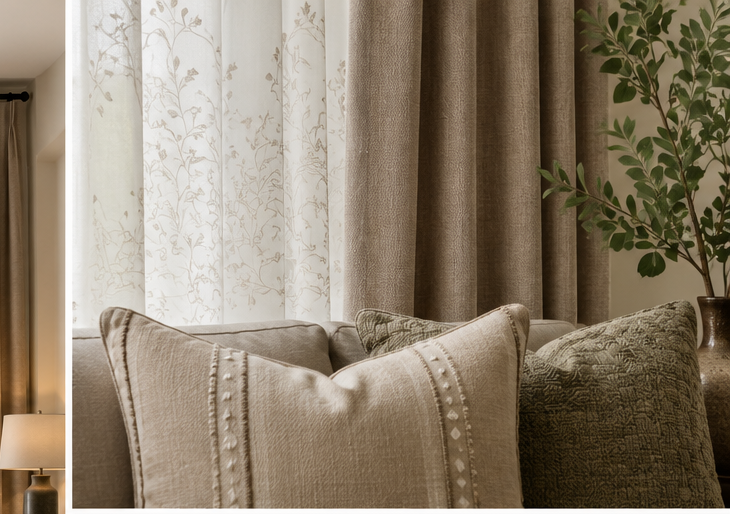
Curtains occupy a significant visual area in most rooms, which means they naturally influence the overall interior scheme. When they are selected independently from the rest of the furnishings, the room can sometimes feel disconnected.
Coordinating curtains with furnishings can help create:
- A balanced colour palette
- Better visual flow
- Greater depth and texture
- A more sophisticated appearance
- A sense of continuity throughout the room
- A professionally styled finish
The goal is not necessarily to make everything match. Instead, the different elements should complement one another through colour, texture, proportion, and design style.
Understanding Curtains and Home Furnishings
When considering curtains and home furnishings, look at the room as a complete composition. Your sofa, chairs, cushions, rugs, flooring, walls, lighting, and curtains should each contribute to the same overall design direction. For example, a room with natural wood furniture and textured upholstery may work beautifully with softly woven curtains and understated furnishings. A more luxurious interior could benefit from richer curtain fabrics paired with refined furniture and layered textiles. Rather than selecting each product separately, think about how each piece contributes to the atmosphere you want to create.
Curtain and Furniture Styling: Where Should You Start?
When planning curtain and furniture styling, it is often helpful to start with the largest visual elements in the room. The sofa, bed, flooring, or rug may already establish the foundation of your interior. Your curtains can then be selected to complement these existing elements.
Consider:
Start With the Dominant Elements
Identify the largest or most visually prominent pieces in the room. These might include a sofa, bed, rug, statement furniture, or flooring.
Build a Complementary Palette
Your curtains do not have to exactly match your furniture. Instead, choose tones that complement the existing palette.
Introduce Different Textures
Combining smooth upholstery with textured curtains, woven rugs, or soft cushions can make a room feel richer and more layered.
Consider Visual Weight
Heavy furniture may benefit from substantial curtain fabrics, while lighter furniture can work well with airy or flowing window treatments.
Interior Styling Ideas Using Curtains
There are many ways to use curtains as part of a larger interior design scheme.
Create a Layered Look
Combining sheer curtains with heavier drapes can add depth while providing flexibility with natural light and privacy.
Repeat Textures
If your room features linen upholstery, woven rugs, or textured cushions, selecting curtains with a related tactile quality can create visual continuity.
Use Curtains to Add Softness
Rooms with hard surfaces such as wood, stone, glass, or metal can benefit from soft, flowing curtains that introduce warmth and movement.
Create a Focal Point
In a relatively neutral room, beautifully styled curtains can become an understated focal element without overwhelming the rest of the space.
Matching Curtains With Furniture Without Making Everything Look Identical
One of the most common questions about matching curtains with furniture is whether they should be the same color. They do not need to be. In fact, using exactly the same color and fabric throughout a room can sometimes make the interior feel flat. A more sophisticated approach is to create relationships between different elements.
For example:
- Pair neutral furniture with curtains in a complementary neutral tone.
- Combine textured upholstery with softly textured curtains.
- Use curtains to introduce a subtle contrast against the furniture.
- Coordinate curtain tones with cushions or rugs rather than matching the sofa directly.
- Repeat a color in small quantities across different furnishings.
This creates a sense of connection while maintaining visual variety.
Choosing the Right Curtain Fabrics
The choice of curtain fabrics can dramatically influence how your furnishings appear.
Linen
Linen offers a relaxed, natural texture and works well with contemporary, minimal, and understated interiors.
Cotton
Cotton provides versatility and can work across a wide range of design styles.
Velvet
Velvet adds depth and richness, making it particularly suitable for sophisticated or luxurious interiors.
Sheer Fabrics
Sheers create a light and airy appearance while allowing natural daylight to filter through. They can also be layered with heavier curtains. The fabric should be selected according to the room’s function, natural light, furniture, and desired atmosphere.
Curtains for Home: Choosing the Right Style for Each Room
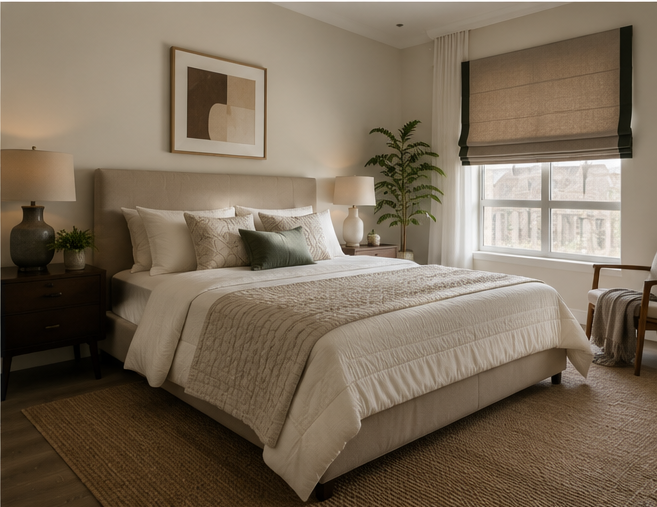
Different rooms require different approaches when selecting curtains for home interiors.
Living Room
Living rooms often benefit from floor-length curtains that complement the sofa, rug, and overall furniture arrangement. Layered window treatments can provide both style and flexibility.
Bedroom
Bedrooms usually require greater privacy and light control. Soft, full-length curtains can create a more comfortable and restful atmosphere.
Dining Room
Dining spaces can benefit from curtains that add softness and texture without competing with the dining furniture.
Home Office
For home offices, consider curtains that provide appropriate light control while maintaining a clean and professional appearance.
How Rugs, Cushions and Curtains Work Together
Curtains are only one part of a complete soft-furnishing scheme. Rugs and cushions can help connect them to the rest of the room.
A simple approach is to create subtle relationships between these elements:
Curtains → Rugs → Cushions → Upholstery
They do not have to share the same pattern or colour. Instead, repeat complementary tones, textures, or materials across the room. For example, a neutral curtain can work with a textured rug and cushions that introduce small variations of the same overall palette. This creates cohesion without making the room feel overly coordinated.
Curtain Styling Ideas for a More Sophisticated Interior
For refined curtain styling ideas, consider the details beyond the fabric itself.
Choose the Right Length
Floor-length curtains generally create a more polished and elegant appearance.
Use Appropriate Fullness
Adequate fabric fullness allows curtains to form natural folds and prevents them from appearing flat.
Consider Layering
Sheers combined with heavier curtains provide both visual depth and practical flexibility.
Pay Attention to Hardware
Curtain tracks, rods, rings, and other hardware should complement the overall design rather than becoming distracting elements.
Consider the Ceiling Height
Mounting curtains higher can visually enhance the height of a room and create a more architectural appearance.
Common Mistakes When Styling Curtains and Furnishings
Avoiding a few common mistakes can make a significant difference to the final result.
Matching Everything Exactly
Using identical colors, patterns, and fabrics throughout a room can make the design feel repetitive.
Ignoring Proportion
Curtains that are too short, narrow, or visually heavy can disrupt the balance of a room.
Choosing Curtains Without Considering the Furniture
Curtains should be selected as part of the complete interior rather than independently.
Using Too Many Patterns
If furniture, rugs, cushions, and curtains all feature strong patterns, the room can quickly feel visually busy.
Forgetting Natural Light
Always consider how sunlight interacts with the curtain fabric throughout the day.
Why Choose Skipper Furnishings?
At Skipper Furnishings, we believe that successful interiors come from thoughtful coordination between individual elements. Curtains, rugs, cushions, upholstery, and other furnishings should work together to create a space that feels balanced and intentional. Our curated range of soft furnishings is designed to complement a variety of interior styles, from understated contemporary spaces to more luxurious and layered homes.
Whether you are selecting curtains for a new home, updating your living room, or coordinating window treatments with existing furniture, Skipper Furnishings can help you create a cohesive furnishing scheme suited to your space.
Frequently Asked Questions
1. Should curtains match the furniture?
Curtains do not need to match furniture exactly. Complementary colours, textures, and patterns generally create a more sophisticated and layered interior.
2. How can I coordinate curtains with my furnishings?
Consider the existing colours, textures, patterns, and visual weight of your furniture, rugs, cushions, and walls. Choose curtains that complement these elements rather than competing with them.
3. What curtain fabrics work best with luxury furniture?
Velvet, linen, and premium woven fabrics can work beautifully with sophisticated furniture. The right choice depends on the overall interior style and desired level of formality.
4. Should curtains match the rug?
They do not need to match exactly. Instead, look for complementary tones or textures that create a visual connection between the curtains and rug.
3. How can I make my curtains look more luxurious?
Floor-to-ceiling installation, generous fullness, quality fabrics, appropriate layering, and carefully selected hardware can all contribute to a more luxurious appearance.
Conclusion
A beautiful interior is created when individual elements work together rather than competing for attention. Curtains and furnishings play an important role in establishing this sense of harmony, helping connect furniture, rugs, cushions, flooring, and décor through complementary colours, textures, and proportions.
Whether you prefer a relaxed contemporary look or a more luxurious layered interior, thoughtful coordination can make your home feel more polished and complete. Instead of trying to match everything exactly, focus on creating relationships between the different elements of your space.
At Skipper Furnishings, we bring together curtains and soft furnishings that can be thoughtfully coordinated to create interiors with warmth, character, and refined style.
Visit Skipper Furnishings to explore our collection of curtains and home furnishings, or Explore Our Collection to find pieces that work beautifully together in your interior.