

Introduction
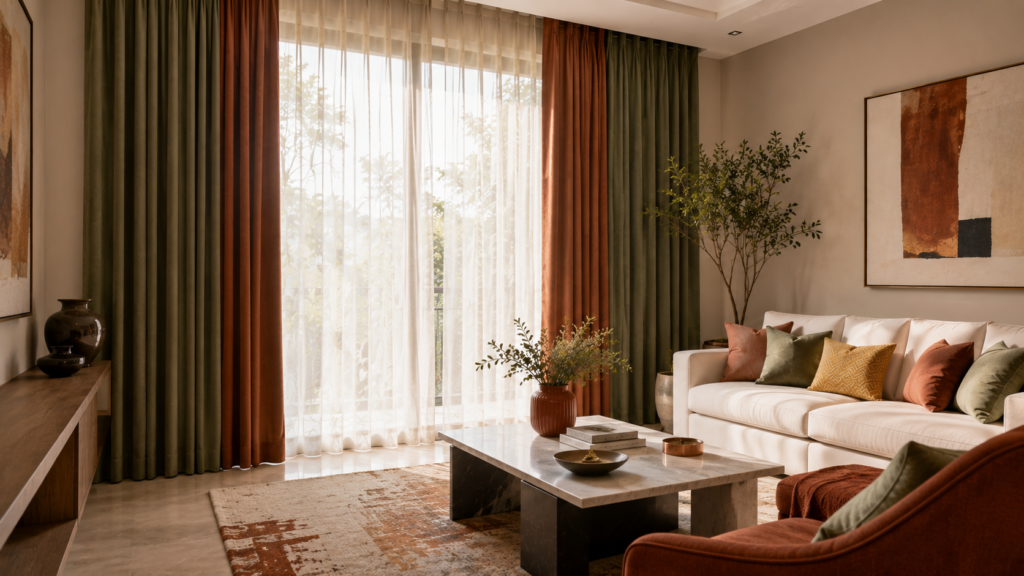
The right curtains for home interiors can do much more than cover a window. They can control natural light, improve privacy, soften a room, and bring together furniture, rugs, and other furnishings. However, the ideal curtain for a living room may not be the best choice for a bedroom or home office. Each room has different requirements, so choosing curtains should involve both style and practicality. From fabric and length to light control and layering, a thoughtful choice can make your interiors feel more comfortable and complete.
Why Curtains Matter in Every Room
Curtains are one of the largest textile elements in a room, which makes them an important part of the overall interior.
Well-chosen curtains can:
- Control natural light
- Improve privacy
- Add softness and texture
- Complement furniture and rugs
- Make windows feel more proportionate
- Create a finished, cohesive appearance
Instead of choosing the same curtain style throughout your home, consider the purpose and character of each room.
How to Choose Curtains for the Living Room
The living room is often the most social space in a home, so curtains here should balance elegance with everyday practicality.
For curtains for living room spaces, consider floor-length styles that complement the sofa, rug, cushions, and overall furniture arrangement.
Layering sheer curtains with heavier drapes can be particularly effective. Sheers allow natural light to filter through during the day, while the outer layer can provide greater privacy when required.
For a sophisticated interior, look for fabrics with attractive texture and a finish that complements the rest of the room rather than matching every element exactly.
Choosing Curtains for the Bedroom
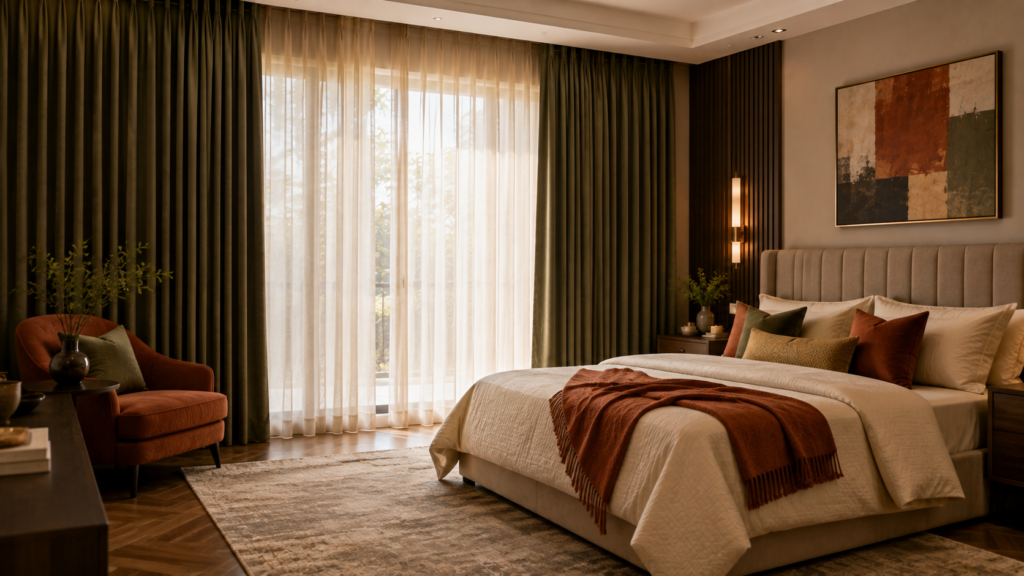
Bedrooms generally require greater privacy and better control over natural light.
Bedroom curtains can be layered with sheers or paired with suitable lining to create a darker, more comfortable environment when needed.
Soft, flowing fabrics can add warmth, while fuller curtains can create a more luxurious appearance. Consider the existing bed linen, cushions, rug, and upholstery when selecting the fabric and overall style.
The goal is to create a calm environment where the curtains support the restful character of the room.
Best Curtains for Dining Rooms
Dining rooms often benefit from curtains that introduce softness without taking attention away from the dining furniture. Light-filtering fabrics can work well where natural daylight is desirable. If the room has strong patterns or a statement dining table, simpler curtains can help maintain balance. For a more formal dining space, richer fabrics and carefully tailored curtains can add an elegant finishing layer.
Curtains for Home Offices
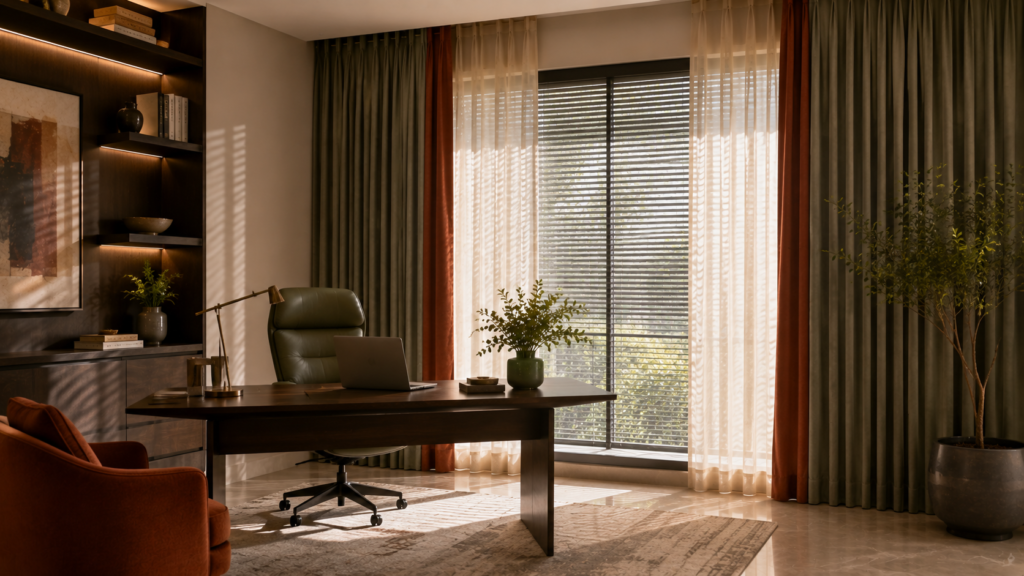
A home office has different requirements from a living room or bedroom. Here, controlling glare and maintaining a comfortable working environment can be particularly important.
Choose window curtains that allow you to manage daylight without making the room feel too dark. Depending on the position of the windows, curtains can be paired with blinds for greater flexibility.
Keep the design relatively clean and coordinated with your desk, chair, flooring, and other furnishings so the room remains visually calm.
How to Choose the Right Curtain Fabric
The choice of fabric affects the way curtains fall, filter light, and contribute to the atmosphere of a room.
Linen
Linen offers a relaxed, natural texture and works well in contemporary and understated interiors.
Cotton
Cotton is versatile and can suit a wide range of interior styles and room types.
Velvet
Velvet provides depth and richness and can work particularly well in more luxurious or formal interiors.
Sheer Fabrics
Sheers allow daylight to enter while adding softness and a degree of privacy. They can also be layered with heavier curtains. When selecting curtain fabric for home, consider the room’s natural light, privacy requirements, maintenance, and overall interior style.
Sheer vs Blackout Curtains
The choice between sheer and blackout curtains depends largely on the room’s function. Sheer curtains are ideal when you want to enjoy natural daylight while adding softness and some privacy. Blackout curtains are better suited to bedrooms and spaces where stronger light control is important. For maximum flexibility, combining both can give you the option to adjust the room throughout the day.
How to Create a Cohesive Look Throughout Your Home
Curtains in different rooms do not need to be identical. Instead, create continuity through a consistent design language.
You might repeat:
- Similar textures
- Complementary tones
- Related fabric qualities
- Consistent curtain lengths
- Similar hardware finishes
For example, you could use lighter curtains in a living room and more light-blocking curtains in a bedroom while maintaining a similar overall aesthetic.
This approach allows each room to have its own character while still feeling like part of the same home.
Frequently Asked Questions
1. Should curtains be the same throughout the house?
Not necessarily. Different rooms have different lighting, privacy, and functional requirements. You can use different curtains while maintaining a consistent overall design style.
2. What are the best curtains for a living room?
Floor-length curtains with a fabric that complements your sofa, rug, and overall interior can work well. Layered sheers and drapes offer additional flexibility.
3. Are blackout curtains suitable for bedrooms?
Yes. Blackout curtains can help reduce incoming light and improve privacy, making them particularly useful in bedrooms.
4. Which curtain fabric is best for a home?
There is no single best option. Linen, cotton, velvet, and sheer fabrics each offer different levels of texture, light control, appearance, and practicality.
5. Should curtains match the sofa?
They do not need to match exactly. Complementary colours, textures, and patterns usually create a more refined and layered interior.
Conclusion
Choosing the right curtains for each room is about finding the balance between style, comfort, and function. Living rooms may benefit from elegant layered treatments, bedrooms often require stronger privacy and light control, while dining rooms and home offices have their own specific requirements.
Rather than selecting curtains in isolation, consider how they work with your furniture, rugs, cushions, flooring, and other furnishings. Thoughtful coordination can make even a simple window treatment feel like an integral part of the interior.
At Skipper Furnishings, we believe curtains should be both beautiful and purposeful. Carefully selected fabrics, thoughtful styling, and quality craftsmanship can help create interiors that feel refined, comfortable, and timeless.
Visit Skipper Furnishings to explore our curated collection of curtains and soft furnishings, or Explore Our Collection to find window treatments suited to every room in your home.