

Introduction
Choosing the right rug size for living room spaces can completely change the way a room looks and feels. A rug that is too small can make furniture appear disconnected, while one that is too large can overwhelm the room. The right size creates balance, defines the seating area, and helps connect furniture into a cohesive interior. Whether you are furnishing a compact apartment or a spacious living room, understanding proportions, furniture placement, and available rug dimensions for living room layouts can help you make a more confident choice.
Why Rug Size Matters in Interior Design
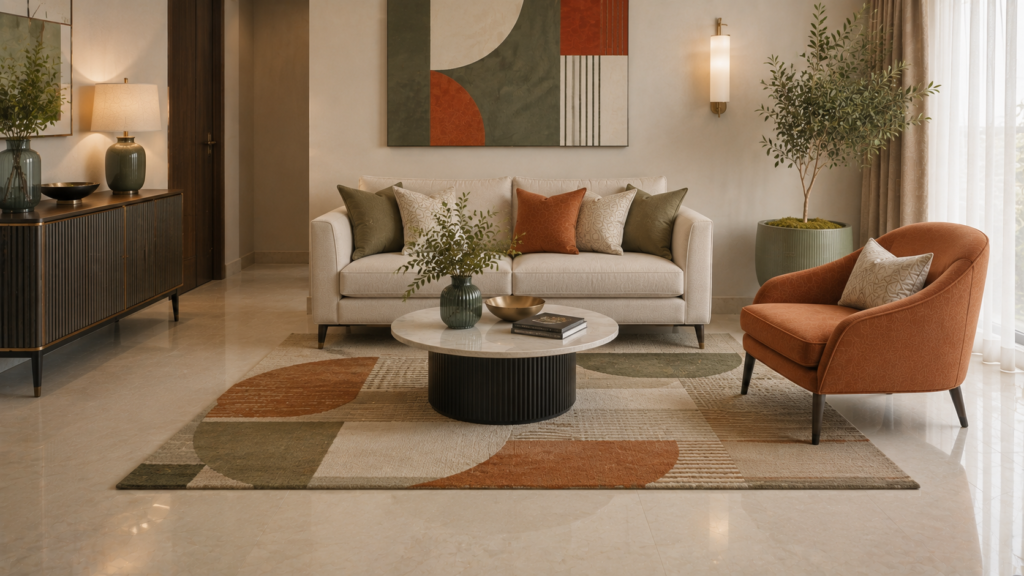
A rug is not simply a decorative addition. Its size can influence the visual proportions of the entire room.
A well-sized rug can:
- Define a seating or conversation area
- Connect sofas, chairs, and tables
- Make a room feel more balanced
- Add warmth and texture
- Create visual continuity between furniture and flooring
- Make large spaces feel more intentional
The rug should relate to the size of your furniture and the room rather than being selected based only on the amount of visible floor space.
How to Choose the Right Rug Size for a Living Room
When selecting a living room rug size, start by measuring your seating arrangement. Consider the width and depth of your sofa, the position of lounge chairs, the coffee table, and the amount of space available around the furniture.
A useful approach is to decide how you want the rug to interact with the furniture:
Fully Under the Furniture
For larger living rooms, a generously sized rug can sit beneath the entire seating arrangement. This creates a strong visual anchor and makes the space feel cohesive.
Front Legs on the Rug
A medium-sized rug can be positioned so that the front legs of the sofa and chairs sit on the rug. This is a versatile arrangement that works particularly well in many contemporary living rooms.
Coffee Table Only
A smaller rug can sit beneath the coffee table, although this approach requires careful consideration of the surrounding furniture. It can work in compact spaces where a larger rug may not be practical.
Common Living Room Rug Sizes
Understanding standard area rug size options can make the selection process easier.
Common rectangular rug dimensions include:
- 5 × 7 ft: Suitable for smaller seating arrangements
- 6 × 9 ft: A versatile option for many medium-sized living rooms
- 8 × 10 ft: Suitable for larger seating areas
- 9 × 12 ft: Works well in spacious living rooms with generous furniture arrangements
These are general guidelines rather than fixed rules. The ideal size depends on your room dimensions, furniture layout, and desired appearance.
How Far Should a Rug Extend Under Your Sofa?
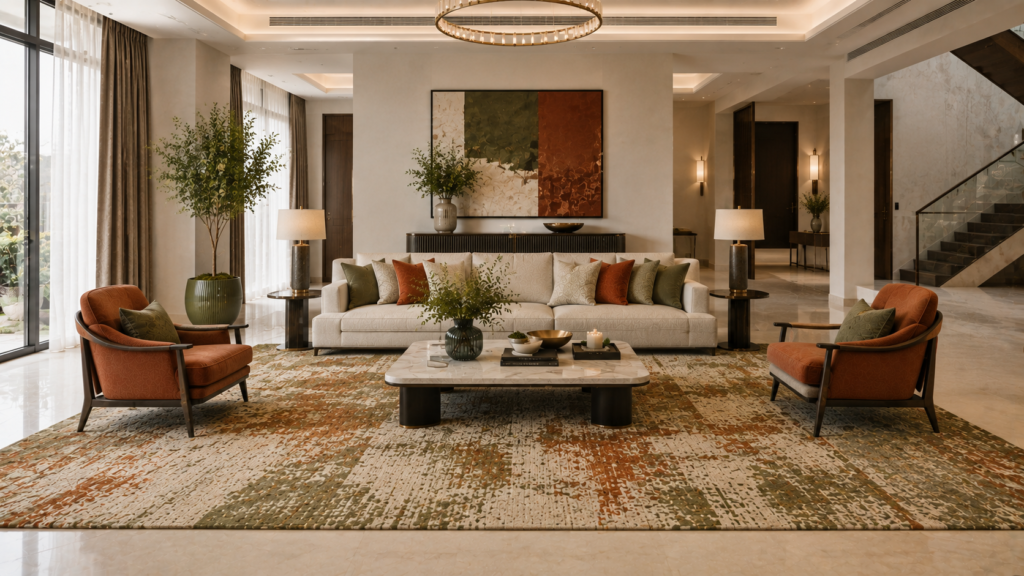
The amount of rug placed under your sofa depends on the layout and size of the room.
For a cohesive appearance, placing at least the front legs of the sofa on the rug can visually connect the seating arrangement. In larger rooms, extending the rug further beneath the sofa and chairs can create a more unified zone. Avoid selecting a rug that ends just a few inches in front of the sofa. This can make the furniture appear visually disconnected from the rug. Before purchasing, measure the sofa and surrounding seating together to determine the appropriate rug dimensions.
Rug Placement Rules for Different Furniture Layouts
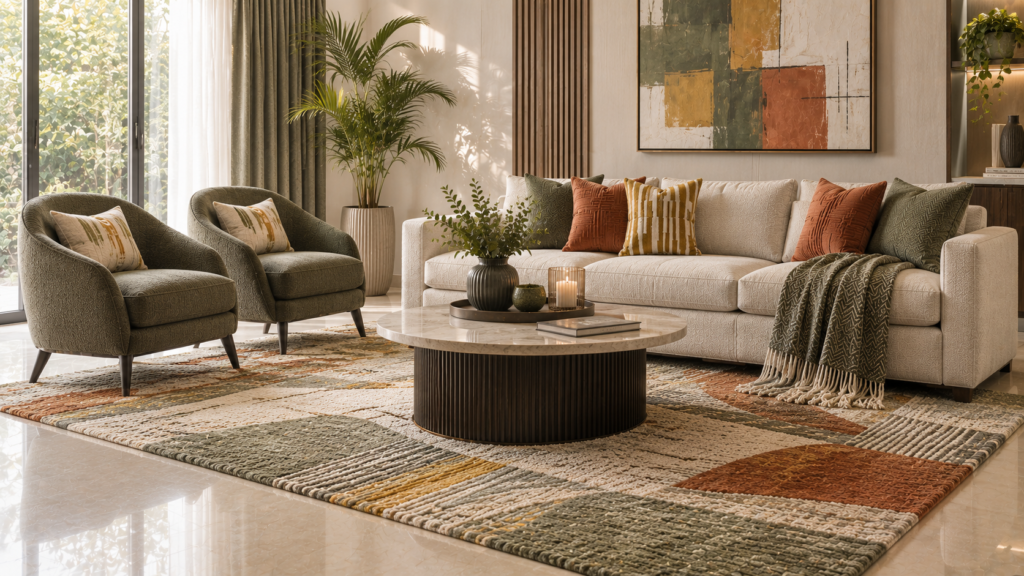
Good rug placement should support the way the room is used.
Sofa and Two Chairs
A rectangular rug can sit beneath the front portion of the sofa and chairs, connecting the three pieces visually.
Large Sectional Sofa
A larger rug can extend underneath the sectional and coffee table, helping define the entire seating area.
Open-Plan Living Room
In an open-plan space, a rug can help visually separate the living area from dining or other zones without using physical partitions.
Small Seating Arrangement
A smaller rug can be positioned beneath the coffee table and front section of the seating, provided it is appropriately proportioned.
Choosing a Rug Size for Small Living Rooms
Small rooms require careful consideration of scale. A common mistake is choosing a very small rug because the room itself is small.
Instead, consider a rug that creates a clear relationship between the main furniture pieces while leaving an appropriate amount of flooring visible around the edges.
A well-proportioned rug can actually make a smaller room feel more connected and intentional.
Common Rug Sizing Mistakes to Avoid
Choosing a Rug That Is Too Small
One of the most common mistakes is selecting a rug that only fits beneath the coffee table while leaving the seating disconnected.
Ignoring Furniture Placement
Always consider the furniture arrangement before choosing your rug size.
Measuring Only the Room
Room dimensions are important, but the size and position of the furniture are equally important.
Blocking Walkways
Make sure the rug does not interfere with natural pathways through the room.
Choosing Based Only on Appearance
A rug may look beautiful on its own but still be incorrectly proportioned for your space. Consider size, placement, material, and furniture together.
Frequently Asked Questions
1. How big should a living room rug be?
The ideal size depends on the room and furniture arrangement. Common options include 5 × 7 ft, 6 × 9 ft, 8 × 10 ft, and 9 × 12 ft, but the correct choice should be based on your specific space.
2. Should all the furniture sit on the rug?
Not necessarily. In many living rooms, placing the front legs of the sofa and chairs on the rug creates a balanced and connected arrangement.
3. What is the best rug size for a small living room?
A medium-sized rug that connects the main seating pieces can work well. Avoid choosing a rug that is so small that it visually separates the furniture.
4. How do I measure for a living room rug?
Measure the overall seating arrangement first, including the sofa, chairs, and coffee table. Then determine how much of the furniture you want the rug to accommodate.
5. Can a large rug make a room look smaller?
Not necessarily. A properly proportioned large rug can actually make a room feel more cohesive and defined. The key is choosing a size that works with the room and furniture.
Conclusion
Choosing the right rug size for living room spaces is ultimately about proportion, placement, and balance. A well-sized rug can anchor furniture, define a seating area, and create a stronger connection between different elements of your interior.
Rather than choosing a rug based solely on its design, consider your room dimensions, furniture arrangement, walkways, and desired placement. Taking these factors into account will help you create a living room that feels balanced, comfortable, and thoughtfully designed.
At Skipper Furnishings, we believe a rug should work as part of the complete interior. From contemporary designs to more traditional and richly textured pieces, the right rug can provide the foundation for a beautifully considered living space.
Visit Skipper Furnishings to explore our curated rug collection, or Explore Our Collection to find a rug that is perfectly suited to your living space.